


Calculous prostatitis is a rare form of the disease and requires special treatment.Therefore, it is important to know how it occurs and what symptoms it is accompanied by.You will learn all the features of the disease from this article.As well as diagnostic and treatment methods.
Calculous prostatitis is characterized by an inflammatory process in which conglomerates of a dense structure are formed.That is, these are stones located in the prostate gland.They consist of elements included in the male body.They arise in the secretion of the prostate gland against the background of chronic prostatitis and pathological disorders.
Reasons
Calculous prostatitis can be caused by:
- Infection of the genitourinary system.These are chlamydia, gonorrhea, trichomoniasis, ureaplasmosis, etc.diseases such asIn the process of reproduction and activation of pathological microorganisms, blockage in the channels of the prostate gland is observed, against the background of which the secretion acquires a thick and viscous structure.Thus, bacteria create a favorable environment for the formation of stones, and prostatoliths contribute to the increase of inflammatory processes, which leads to the development of obstruction in the prostate.
- Stagnation of all processes in the gland due to various reasons - the presence of an adenoma (benign tumor) in the prostate gland, inactivity, the influence of unhealthy foods, alcohol abuse, smoking.But often the reason is the lack of regular sexual life, because in this case the glands cannot empty the stones normally, so stagnation occurs.
- Urethro-prostatic reflux.With this disease, small amounts of urine are released into the prostate during urination.As urine accumulates, crystallized salts are released, which over time grow and thicken, turning into stones.Uretro-prostatic reflux develops due to damage to the urethra, prostate atony, resection of the prostate gland, etc.
- Disruption of blood circulation in the pelvic organs also causes stagnation.
- Frequent hypothermia of the body and genitals.
- Failure to observe the rules of personal hygiene leads to infection, which leads to calculous prostatitis.
- Old age.This is due to the formation of a kind of phosphoric acid and lime coating on thickened epithelium and amyloid bodies.
Stone formations are yellowish in color and spherical in shape.The minimum size of prostatoliths is 0.25 cm, the maximum is 0.4.They occur singly or in multiples and are mainly of the following types: phosphate stones, oxalate stones or urate stones.
Symptoms
The presence of prostatoliths in the prostate gland is indicated by the following symptoms:
- dull and aching pain in the perineum, groin, coccyx, scrotum;
- increased pain after physical activity, bowel movements, sexual intercourse, sitting for a long time in one position;
- sharp pain when urinating;
- jet breaks;
- frequent urge when urine is retained;
- blood particles in urine and semen;
- premature ejaculation;
- weakening of potential;
- increased body temperature;
- insomnia;
- decreased appetite;
- psycho-emotional instability.
Stages of bacterial prostatitis
- Primary or catarrhal.In the initial form, stones are formed in prostate acini or ducts.The symptoms of the catarrhal type are mild, the symptoms are similar to a cold.If you consult a urologist on time and start adequate treatment, you can get rid of the disease within a week.
- Secondary or follicular.In the secondary form, prostatoliths penetrate the body from the kidneys, bladder and other elements of the body against the background of urolithiasis.Follicular type may develop after untreated catarrhal type.Manifestations are acute, with an increase in body temperature and suppuration, and the duration of therapy is long.
- Tertiary or parenchymal.In the third form, the parenchyma of the prostate gland is affected, therefore it is called parenchymal (diffuse).This is the last stage of the acute course, when the symptoms are very severe.Purulent exudate is formed in the inflamed area.The treatment process is long, endurance is difficult.
Possible complications of calculous prostatitis
What are the complications of untreated calculous prostatitis:
- abscesses in the prostate as a result of the accumulation of purulent fluid in the tissues;
- intoxication of the body with purulent formations and further development of sepsis, which leads to death;
- atrophy of the prostate gland and resulting impotence;
- acute or chronic form of vesiculitis, characterized by dilation of blood vessels in the spermatic cord, leading to impotence and infertility;
- cystitis and urinary incontinence.
To avoid such consequences, when you see the first signs, you need to go to the clinic and undergo a thorough examination.
How to eliminate an attack at home?
It is quite clear to any sane person that it is necessary to call an ambulance during an attack.But you can take regular pain relievers before his arrival.If you have propolis-based rectal suppositories in your home medicine cabinet, perform the appropriate procedure.Relieves pain and laxative tablets.
Which doctor treats you?
A urologist (or andrologist) treats any form of prostatitis.Other highly qualified doctors are also involved in the process of diagnosis and selection of treatment tactics - depending on the cause of stone formation, nephrologist, infectious disease specialist and others.
Diagnostics
During the initial visit to the urology office, the doctor conducts a palpation and visual examination, after which he collects an anamnesis.Lifestyle, the presence of certain pathologies and the nature of the emerging symptoms should be taken into account.The following diagnostics are performed:
- collection of blood and urine for general analysis to determine the quantitative number of structural units (composition of biological fluids);
- accumulation of seminal fluid (calculous prostatitis is characterized by an increase in sperm epithelial tissue and amyloid bodies);
- spermogram allows to study the degree and number of sperm motility;
- x-ray of the prostate gland;
- ultrasound examination of the prostate gland;
- computed tomography or magnetic resonance imaging.
It is mandatory to collect blood for PSA, which allows you to determine the specific prostate antigen (a type of tumor marker of the prostate gland).
Treatment of calculous prostatitis
The duration of therapy and the choice of therapeutic measures depend on the degree of neglect of the disease, as well as its form, the reason for its development and the presence of complications.
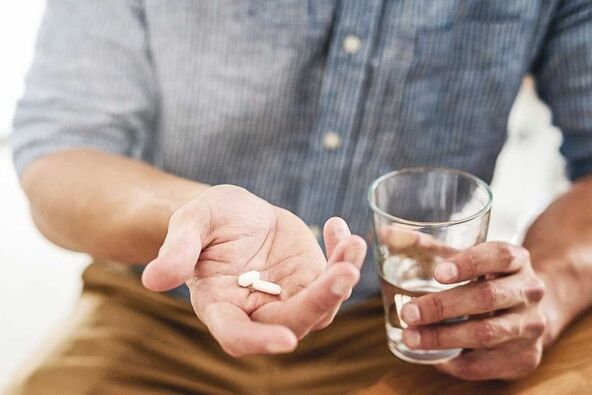
Drug treatment
- The fluoroquinolone group for the destruction of pathogenic microbes that most often cause prostatitis.These are antibiotics that easily cope with many pathogens.
- Penicillin group of antibacterial substances.
- Tetracycline antibiotic group.However, tetracyclines have a large number of side effects, so they are prescribed less often than other groups.
- Cephalosporins are used intramuscularly.
- Nonsteroidal anti-inflammatory drugs relieve pain and reduce inflammation.
- To strengthen the immune system, the patient should take vitamin complexes.
Surgical intervention
- Transurethral electroresection allows removing stones and burning blood vessels.For this, a high-frequency electric current and a resectoscope inserted through the lumen of the urethra are used.The operation is painless, but prostatolith particles are likely to remain.
- Transurethral surgery under ultrasound guidance.Unlike the previous method.Thanks to increased ultrasound tracking, all stone formations are removed.
- Strip prostatectomy (stones are removed by cutting) and endoscopic (using an endoscope inserted into the prostate).In addition to advanced stones, resection of the prostate gland, lymph nodes and seminal vesicles is performed.
- Lithotripsy involves the use of a laser, crushing the stones, after which they are removed naturally.An endoscope is used for this.
Physiotherapy
- exposure to ultrasound reduces the level of inflammation, relieves pain;
- laser therapy accelerates metabolic processes in the prostate and relieves discomfort;
- magnetic therapy restores blood circulation and neutralizes swelling.
Massage normalizes the opening of the channels, accelerates blood supply, which is considered effective for prostatitis, but it is strictly prohibited for the calculous form.This is because prostatoliths can move throughout the body.
If you cannot attend physiotherapy procedures, you can do them at home using special devices.But remember that physiotherapy is effective only during remission - when prostatitis is in an acute stage, the use of devices is prohibited.
Diet therapy
A patient diagnosed with calculous prostatitis is required to follow a special diet prepared by a nutritionist at an individual level, depending on the severity of the pathology.
The basis of the diet is to avoid alcoholic and carbonated drinks, fried, smoked, salty and spicy foods.It is undesirable to use broths based on fatty meat, fish and mushrooms.You will have to exclude horseradish, radish, garlic, cabbage, beans and onions from vegetables.And other products that cause gas formation.
Therapeutic exercise
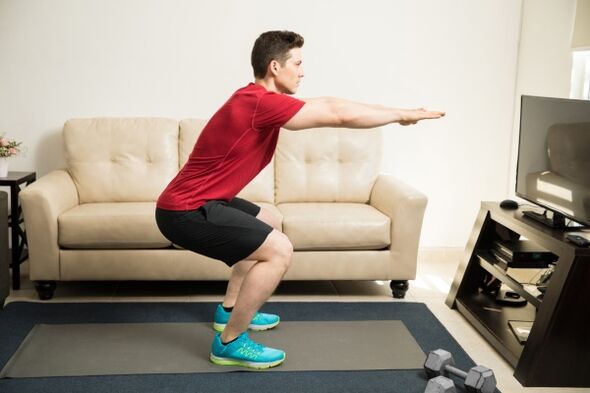
It is always used for prostatitis, but exercise should be light to prevent movement of stones with calculative form.Gymnastics should stretch the muscles of the perineum.For this, you can do the following exercises at a slow pace:
- Get on a chair and put your hands behind your back.Pull one leg to the side, raise it as high as possible.Lower the limb.The same movements are performed with the other leg.Number of approaches – 8-10.
- Lean back on the chair and lean into it.Raise your legs one by one to your stomach, bend at the knees.
- Spread your legs wider than your shoulders, squat and hold the position for a few seconds.Stand up.When exercising, try to make springy movements in the squatting position.Repeat no more than 5 times.
Folk treatment
- Eat 25-30 raw pumpkin seeds daily on an empty stomach.
- Herbal decoction.You need equal proportions of the bare master and the black initial.Set aside 1 tbsp.l.herbs, pour 0.5 liters of "steep" boiling water, brew.Take 100 mg 3 times a day half an hour before meals.
- Brew the brown rose root according to the recipe indicated on the pharmacy packaging.Drink as tea three times a day.
- Pour 2 tbsp into a glass of boiling water.l.parsley seeds and boil on low heat for 10-15 minutes.Leave for an hour.Drink one spoon up to 6 times a day.
- Drink 600-1000 ml of freshly squeezed asparagus juice daily.
- Other natural juices are also useful - carrot, beet, cucumber.
Forecast
In the treatment of calculous prostatitis, conservative therapy is used initially, the result is usually favorable.In advanced forms and in the absence of positive dynamics of drug treatment, surgery is used.In this case, the forecast is also favorable.However, special attention should be paid to the rehabilitation period to prevent infection and other complications.
Preventive measures
To prevent the development of calculous prostatitis and prevent relapse, follow simple rules:
- eliminate bad habits;
- seek immediate medical attention for any pathological disorder;
- strictly follow the urologist's instructions;
- do not get too cold;
- use condoms to prevent infection;
- Have an active sex life with a partner.